The Universal K-BBQ Stir-Fry Master Base (Meat, Seafood, and Veggies)
Vault Track: #2 | Sealed on 2026-06-17
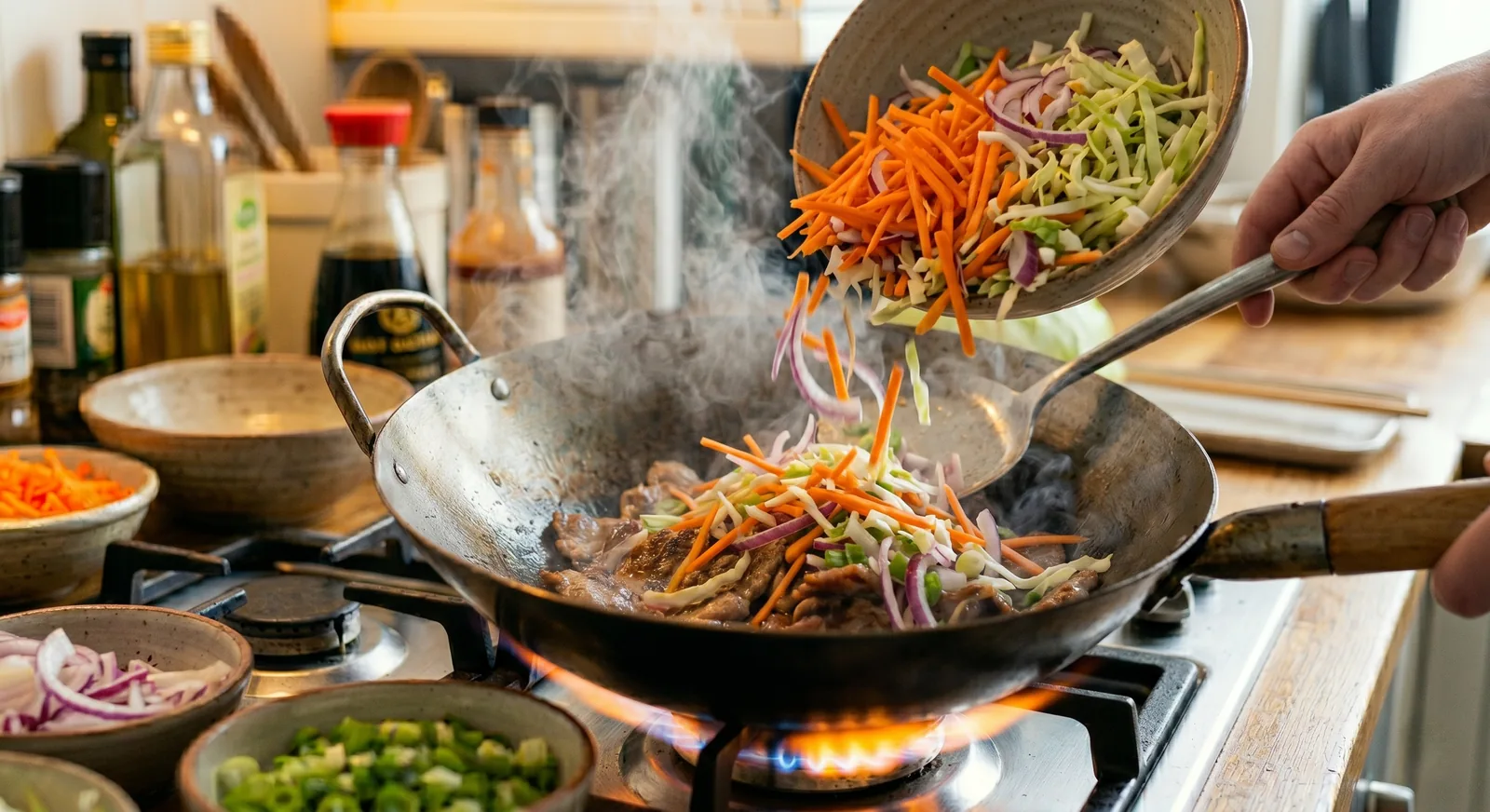
1. Operation Guide: The Universal Stir-Fry Protocol
This formulation is designed as an all-in-one culinary solution. Whether you are tossing fresh vegetables, sliced meats, or delicate seafood in a high-heat wok, this master base locks in an instant K-BBQ flavor profile.
- Standard Dosage: Use 1 to 2 tablespoons of this sauce base per 200 grams of raw ingredients.
- Customization: Adjust the dosage slightly based on the natural moisture release of your specific ingredients.
2. Quality Control (QC): Absolute Airtight Protocol for Bulk Storage
To guarantee kitchen consistency, this sauce must be prepped in large batches and allowed to mature. However, high-volume storage introduces a hidden operational leak: Refrigeration Evaporation.
When stored in standard commercial walk-in coolers after opening, the cold airflow continuously strips moisture from the surface of the paste, causing it to harden, layer over, and alter its specific gravity.
- The Absolute Airtight Rule: Never leave bulk containers loosely covered. You MUST store the master sauce in completely airtight, sealed containers immediately after prep.
- The Pre-Portioning Strategy: For maximum stability, divide the master batch into smaller 1kg or 2kg service units before sealing.
- The Oil Seal Defense: Pouring a micro-layer of standard cooking oil over the surface of the paste before sealing creates a physical barrier that perfectly eliminates evaporation and cross-contamination.
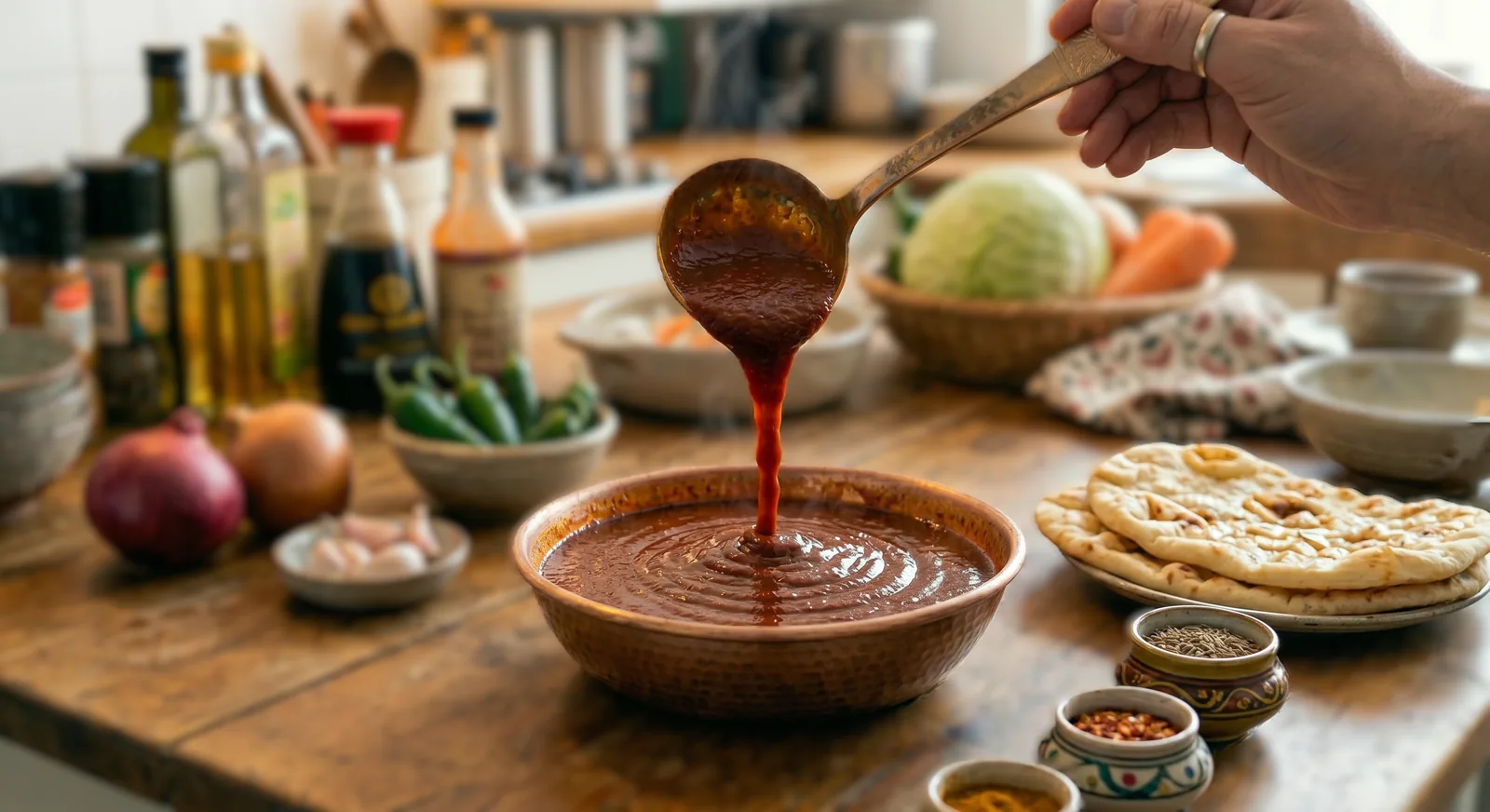
⚠️ Why Viscosity Dictates Your Wok Yield:
- If the sauce is too watery (Low Viscosity): Excess moisture will accumulate at the bottom of the wok. Instead of high-heat searing/stir-frying, the cooking chemistry instantly shifts to boiling or stewing, destroying the texture of your meat and veggies.
- If the sauce is too thick (High Viscosity): The paste will fail to liquefy and spread smoothly across the pan. It will clump up, leaving sections of the dish completely bare while burning other spots due to uneven coating.
This formula reacts perfectly with both water and cooking oils, offering ultimate flexibility on the hot line.
3. The Science of Umami: Debunking the MSG Myth
Look closely at the ingredient decks of your favorite global snacks, packaged sauces, and commercial food products—MSG (Monosodium Glutamate) is already universally embedded everywhere. The FDA has officially classified MSG as a food ingredient that is fundamentally safer than standard table salt. There is absolutely no reason for modern kitchens to fear this component. It is a highly efficient tool designed to make your high-volume preps fast, delicious, and consistent.
🧠 The Biological Process of MSG: Human taste receptors are genetically wired to signal a deep chemical euphoria when digesting heavy meat proteins. MSG triggers this exact biological process. By interacting with your tongue's umami receptors, it tricks the brain into perceiving a deep, rich meat profile—even when cooking low-cost vegetables or lean seafood. It mimics the luxury of slow-rendered meat fats instantly, delivering immediate palatability across your entire menu.
⚖️ Precision Scaling Calculator
| Ingredient | Original | Scaled Display |
|---|---|---|
| Sugar | 6.7g | 6.7 g |
| Gochujang (Korean Chili Paste) | 6.7g | 6.7 g |
| Soy Sauce (Korean Jin-Ganjang) | 6.7g | 6.7 g |
| Chili Flakes (Mild) | 5.1g | 5.1 g |
| Chili Flakes (Spicy) | 1.7g | 1.7 g |
| Minced Garlic | 3.4g | 3.4 g |
| Oyster Sauce | 3.4g | 3.4 g |
| Agave Syrup (or Corn Syrup) | 3.4g | 3.4 g |
| MSG | 1.01g | 1.0 g |
Scaling This Recipe: The Universal K-BBQ Stir-Fry Master Base (Meat, Seafood, and Veggies)
This vault entry is built for operational scaling in professional kitchens. The embedded calculator converts each ingredient to a gram-based baseline, then multiplies every line by your target batch ratio.
When ingredients were entered with volumetric source data, CalcRecipe applied density calibration so a tablespoon of paste does not scale like a tablespoon of water.
Return to the AI Scaler on the food page, or browse more formulations in the Chef's Vault.
Have any suggestions or found a bug in this recipe?
💡 Submit Your Feedback